
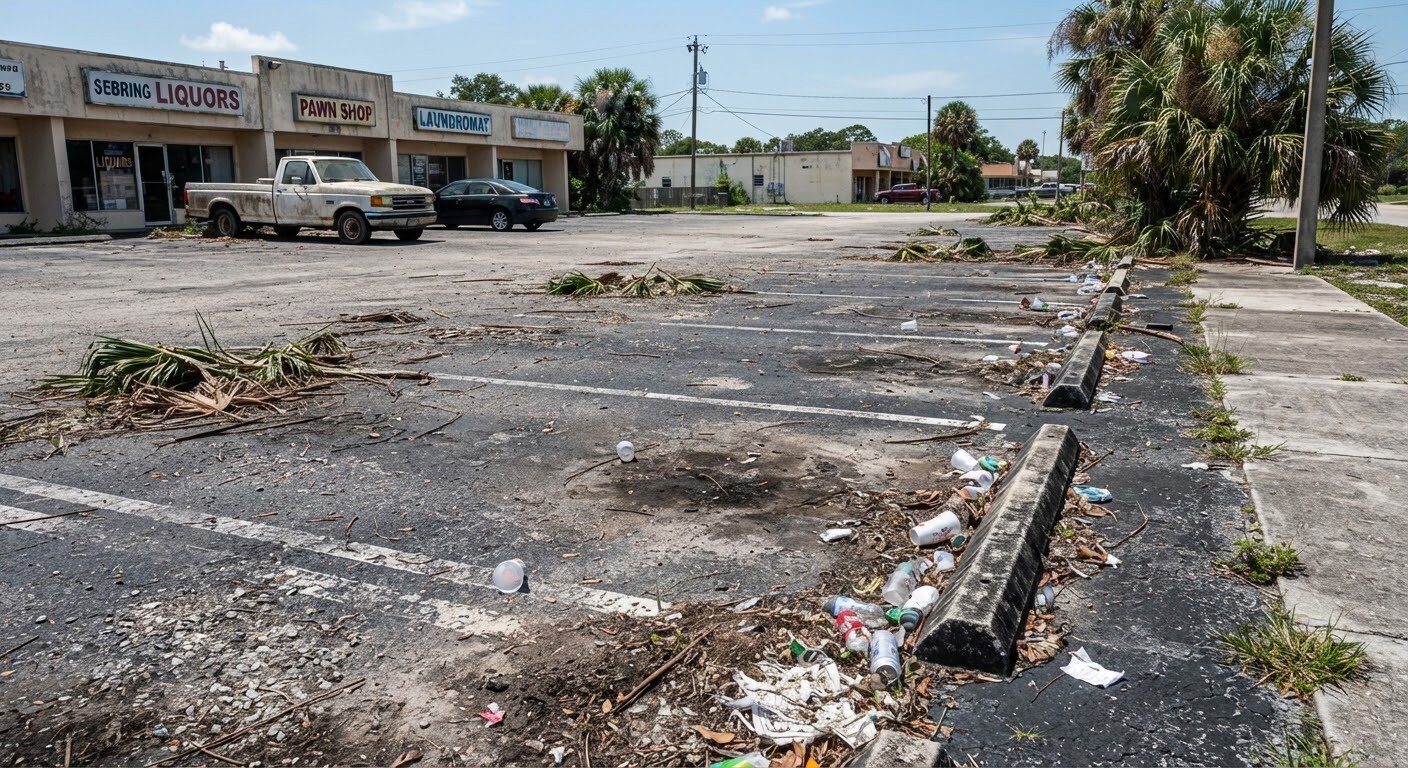
When a tropical system passes through Central or Southwest Florida, the parking lot is the first thing customers, tenants, and insurance adjusters see. A fast, orderly cleanup gets the property open and reduces slip, trip, and tire-damage claims. This is the checklist we run with property managers before and after a storm.
Before the storm
- Clear drains and gutters now. A pre-storm sweep that removes leaf litter and sediment from catch basins is the single most effective way to prevent lot flooding.
- Secure loose items. Trash can lids, A-frame signs, planter decorations, and dumpster enclosure gates become projectiles. Ask tenants to bring in patio furniture.
- Photograph the lot. Wide shots of each drive aisle, the drains, striping, and landscaping give you a baseline for insurance.
- Confirm your sweeping vendor’s storm plan. Know who to call, what the response window is, and whether you have priority as an active account.
- Stage access. Gate codes, after-hours contacts, and any clearance limits should already be on file with your vendor.
After the storm: first 24 hours
- Safety walk. Look for downed lines, standing water over drains, displaced wheel stops, and broken glass before any vehicle enters.
- Open the main drive aisles. Mechanical sweepers with heavy brooms clear fronds, branches, gravel, and silt so emergency and delivery vehicles can move. This is the first wave we mobilize once sustained winds drop below roughly 45 mph.
- Clear every catch basin. Debris packed against grates will flood the lot in the next rain band.
- Remove hazards from pedestrian paths. Sidewalks, storefront aprons, and ramps get blown and swept so tenants can reopen.
- Photograph again. Before-and-after pictures from the cleanup support your claim and show tenants the property is under control.
Days two through seven
- Return passes to collect what landscaping crews cut and what wind keeps shaking loose.
- Hand-porter landscape islands, fence lines, and retention pond edges where lightweight debris lodged.
- Inspect striping, signage, and asphalt for storm damage and note anything that needs repair.
- Coordinate with your waste hauler on bulk debris pickup so corrals do not overflow.
What to expect from an emergency sweep
Storm cleanup is heavier than a routine pass. Expect multiple truck loads of organic debris, extra time around drains, and crews working in daylight rather than overnight. We price storm response by the hour with a clear scope, and active commercial accounts are queued first. If you manage several properties, a portfolio agreement locks in a dedicated unit and response window ahead of hurricane season.
Plan ahead
June 1 is the start of hurricane season. Properties on a regular sweeping schedule with clean drains come through storms with less flooding and faster reopening. Check whether your property is inside our rapid-response corridors, or request an estimate that includes a storm standby arrangement.