
“How often should we sweep?” is the first question every property manager asks, and the honest answer is: it depends on what your lot collects. A grocery-anchored plaza with three drive-throughs needs a different cadence than a quiet medical office park. Below is the framework we use when we build a sweeping schedule for a Central or West Florida property.
What actually drives sweeping frequency
- Traffic volume. More vehicles mean more tire grit, more dropped trash, and more sand tracked in from adjacent roads.
- Food and beverage tenants. Quick-service restaurants and coffee drive-throughs generate cups, lids, straws, and napkins every single day.
- Landscaping. Oaks, pines, and palms shed leaves, needles, fronds, and seed pods year-round in Florida, and most of it ends up along the curb line.
- Construction nearby. Track-out from an adjacent job site can coat a lot in silt in a week.
- Stormwater exposure. Lots that drain to catch basins or a retention pond fall under local stormwater rules, which push toward more frequent curb and drain cleaning.
Recommended cadences by property type
Nightly (5–7 nights per week)
Grocery-anchored shopping centers, big-box retail with restaurant outparcels, 24-hour pharmacies, and busy fuel plazas. At this traffic level litter migrates into storefronts within hours, so the lot should be reset every night before doors open.
Three to four nights per week
Standard strip plazas, neighborhood retail, dealerships, and hospital or urgent-care campuses. This is the most common commercial schedule in our fleet and keeps curb lines consistently clean without paying for passes you don’t need.
Weekly
Professional office parks, banks, churches, and light industrial sites with modest traffic. Weekly sweeping removes the abrasive sand that wears down sealcoat and keeps drains clear ahead of summer storms.
Bi-weekly or monthly
HOA private roads, condominium guest lots, self-storage facilities, and warehouses with limited public traffic. Pair a lighter cadence with seasonal deep cleans after oak-leaf drop and after the first heavy rains of summer.
On demand
Post-storm recovery, pre-event and post-event cleanups, construction track-out, and move-in days. These run in addition to a recurring schedule, usually within hours of the call.
Signs your current schedule is too light
- A visible band of sand and debris along the curb by mid-week.
- Cups and wrappers collecting around wheel stops and planter beds.
- Standing water near catch basins after a normal afternoon storm.
- Tenant complaints about litter near entrances.
- Faded striping and a dull, grey surface where sealcoat is being ground away.
What a sweep should include
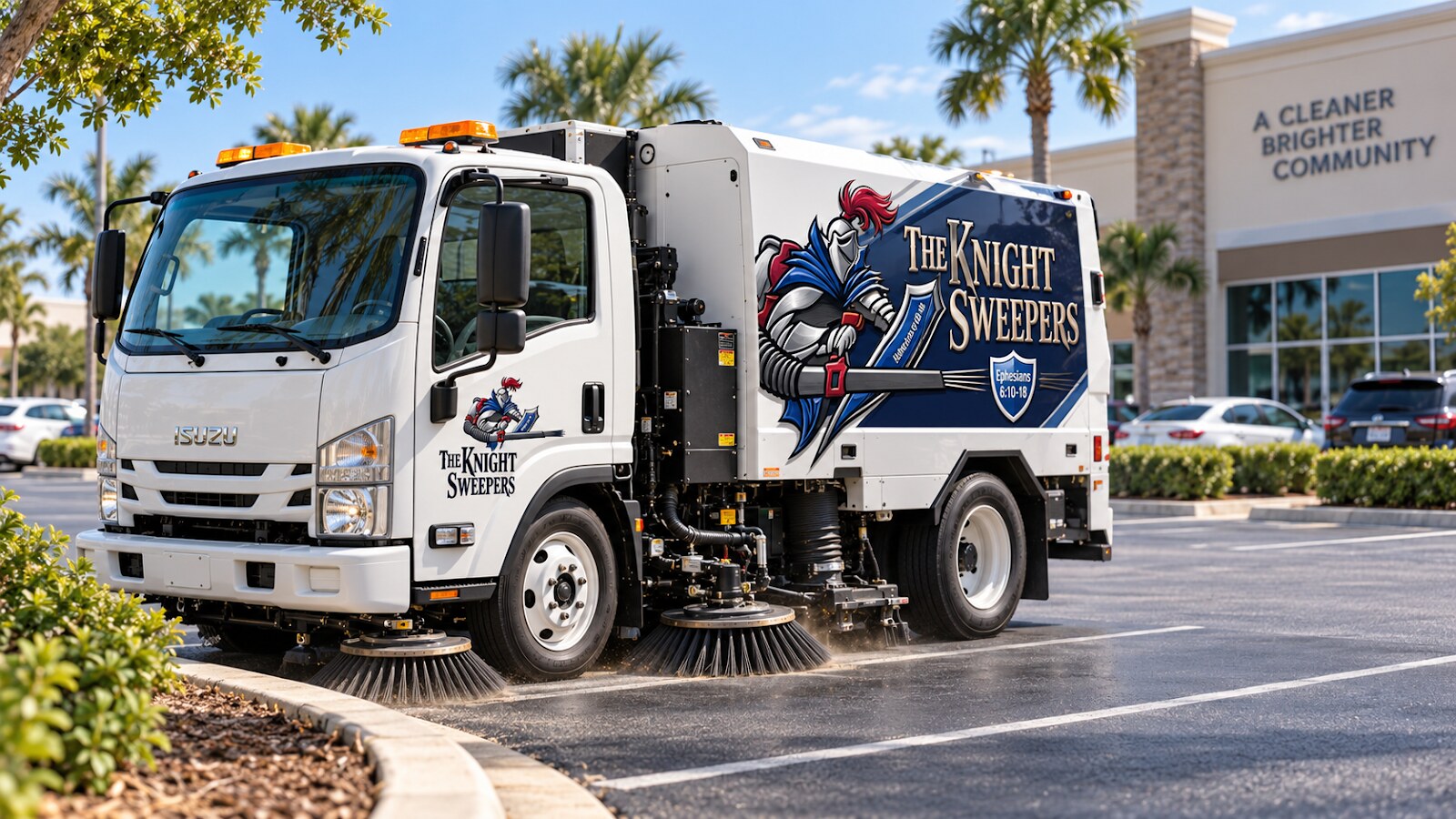
Frequency only matters if each visit is thorough. Every Knight Sweepers pass covers the drive aisles and stalls with a regenerative-air sweeper, scours the curb line with steel gutter brooms, blows sidewalks and storefront aprons into the sweeper path, and clears debris from storm drain grates. Dumpster corrals and landscape islands are hand-portered on request. Each run is GPS time-stamped and photographed so you can see exactly what was done.
Getting a schedule that fits your budget
We measure your lot by satellite, look at tenant mix and landscaping, and propose a cadence with pricing for each tier so you can compare. Most agreements are month-to-month with 30 days’ notice, and we will adjust frequency as seasons change. Request a free estimate or review our service tiers to see what each cadence includes.